The one-hour routine, in order
Run these checks in this order. Each one rules out a cause so the next one means more.
- 1
Stop all water use
Close taps, pause the dishwasher and washing machine, and turn off the ice maker and any irrigation timer.
- 2
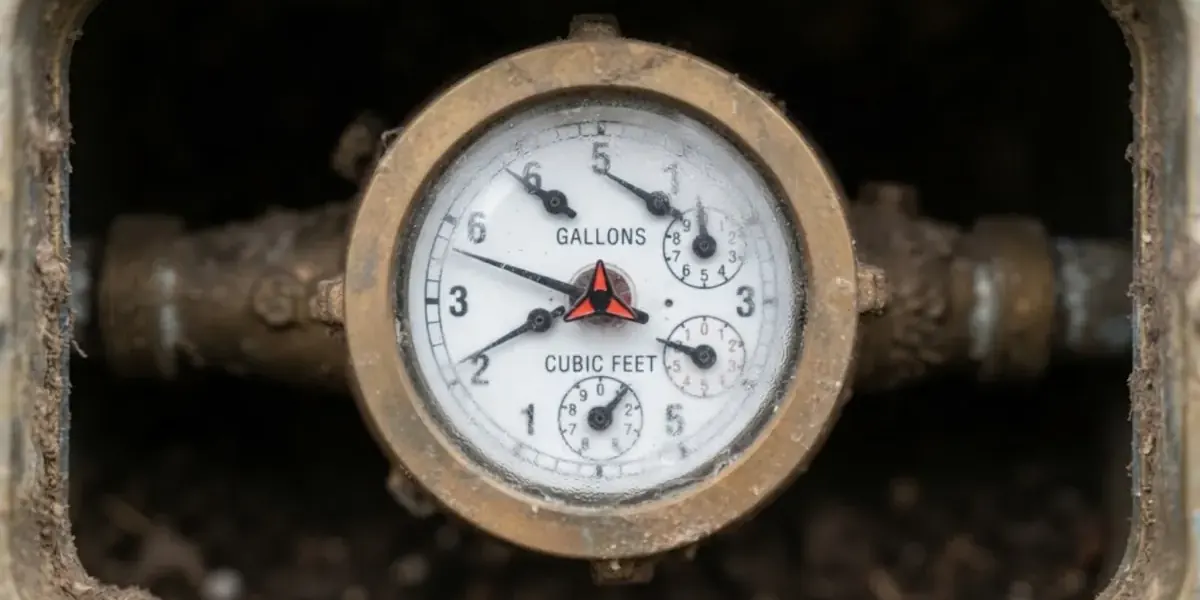
Read the meter
Lift the lid, note the leak indicator or the last digits on the dial, and wait at least 15 minutes. Read it again.
- 3
Shut the house cutoff and read again
If the meter still moves, the leak is on the line between the meter and the house. If it stops, look inside.
- 4
Run the toilet dye test
Put food coloring in each tank, do not flush, and wait an hour. Color in the bowl means the flapper leaks.
- 5
Walk the house
Check under sinks, behind the toilet, around the water heater and along exterior walls. A wet faucet base may only need faucet repair.
Why the meter is your best clue
A water meter counts every gallon that passes, so it cannot be fooled by a stain that is old or a smell that is imagined. If the dial turns with nothing running, water is escaping somewhere. That is a fact, not a hunch.
Greenville Water does not estimate bills except in unusual cases, so a high bill generally reflects water that actually moved through your meter. Its customer service line is (864) 241-6000 if you want to confirm a reading with the utility. Mauldin homeowners who see an unexplained spike should run the meter test before blaming a meter error.
Symptom, likely cause and next move
| What you notice | Likely cause | Your next move |
|---|---|---|
| Meter moves with everything off | Leak in the yard line or a running toilet | Run the cutoff test, then the dye test |
| Toilet refills by itself | Worn flapper or fill valve | Dye test, then replace the part |
| Damp cabinet under a sink | Supply line, drain slip nut or faucet base | Dry it, tighten, recheck in a day |
| Stain spreading on a ceiling | Supply or drain line above, or a roof leak | Shut the main, call, and do not poke the ceiling |
| Warm spot on the floor | Hot-water line under the slab | Shut off the water heater, call a plumber |
| Low pressure at every tap | Leak, a failing regulator or a partly closed valve | Check the main valve, then call if the meter moves |
| Green, soggy patch in the yard | Buried service line leak | Run the cutoff test, mark the spot, call |
A guide only. Several causes can look alike, and a plumber confirms with pressure and listening tests.
Reading the signs inside the house
Water leaves clues. Look for paint that bubbles, a baseboard that swells, drywall that feels soft, or a smell like wet cardboard. A hissing sound with every tap closed suggests pressurized water escaping. A tapping sound in the wall can be pressure surges or a pipe working loose.
Check the often-missed spots. The valve under the toilet, the washer hoses, the icemaker line behind the refrigerator and the water heater's relief valve line are all common culprits. A quick flashlight sweep with a dry paper towel pressed against each connection shows a seep that a glance misses.
January in Mauldin and the pipes it tests
The National Weather Service station at Greenville-Spartanburg records an average January low of 32.1 degrees F for 1991 to 2020, with 16 days in January at or below 32 F. That is mild by northern standards, but 16 freezing nights are enough for a poorly insulated pipe to freeze and split.
That has a practical meaning for your checks. If you find a leak in late winter or early spring, look first at pipes on exterior walls, in a crawlspace, in a garage or in an attic, because those face the coldest air. A pipe that froze and cracked often leaks only after it thaws, so the damage shows a day or two after the cold snap.
Source type: NWS Greenville-Spartanburg climate normals, 1991 to 2020.
A running toilet is the most common false alarm
A toilet flapper that does not seal can pass gallons an hour without any sound. It will move the meter and raise the bill, and it looks exactly like a pipe leak until you run the dye test.
Replacing a flapper takes ten minutes and costs a few dollars. Do that before assuming a pipe has failed. If the color stays in the tank after an hour, the toilet is sound, and your search moves to the pipes.
When to stop and call a plumber
Any of these means the DIY phase is over.
- The meter moves after the house cutoff is closed.
- You find water coming from behind a wall or ceiling.
- A floor is warm in one spot.
- A pipe has split or is spraying. Shut the main and call right away, as a burst pipe floods quickly.
- You smell sewage, which points to a drain problem, not a supply leak.
- You cannot find the shutoff valve or it will not close.
If you ever smell natural gas, leave the home and call the gas utility or 911 before you call a plumber.
What a plumber adds that you cannot
A plumber can pressure-test a single run, listen to a pipe through a slab and use a camera or a thermal scanner to see inside walls. Those tools turn a guess into a location and save you from cutting a hole in the wrong wall.
The visit also gives you repair options with honest trade-offs. A leaky faucet base may need only a new cartridge, while a hidden supply leak may need an access hole and a new pipe segment.
A word on small leaks and delay
A drip under a sink can wait a few days if you place a bowl under it and keep checking. A leak behind a wall cannot. Water in a wall cavity feeds mold within a day or two in warm, humid weather, and drywall that stays wet has to come out.
Do not rely on tape, putty or sealants for a pressurized joint. They hold for a short time and then let go, often at a bad hour. If you want a plumber to look at it, homeowners in Greer and Simpsonville use the same 24/7 line, so there is no need to wait for a weekday.
Keeping a log helps the plumber
Write down the meter reading at the start and end of your test, the time you noticed the first sign, and which fixtures are affected. A photo of the meter dial with a timestamp is better than memory.
This takes five minutes and shortens the diagnosis. It also helps if you file an insurance claim later, since it shows when you found the problem and what you did about it.
Pipe leak questions from Mauldin homeowners
At least 15 minutes with no water in use. For a slow leak, wait 30 minutes or overnight. Photograph the dial both times.
Yes. Add the coloring to the tank, do not flush, and check the bowl in an hour. If it is running audibly, color can appear within minutes.
Usually a faint hiss when every tap is closed, or a trickle where there should be silence. Pressure surges that cause tapping in walls are different and point to loose pipe or a worn valve.
Yes, and the bill reflects water that passed through the meter. A leak of a few drops a second can waste hundreds of gallons over a month, and a running toilet wastes far more.
Yes. Supply pipes inside walls can seep for months before a stain shows. The meter test is how you find out without opening anything.
Greenville Water says it does not estimate bills except in unusual cases, so a high bill normally reflects real readings. Run the meter and cutoff tests first. For a reading question call the utility at (864) 241-6000, and call a plumber for the pipe on your side.
They can. A frozen pipe may crack and only leak after thawing. NWS Greenville-Spartanburg normals show 16 January days at or below 32 F, so exposed pipes deserve a check after a cold snap.