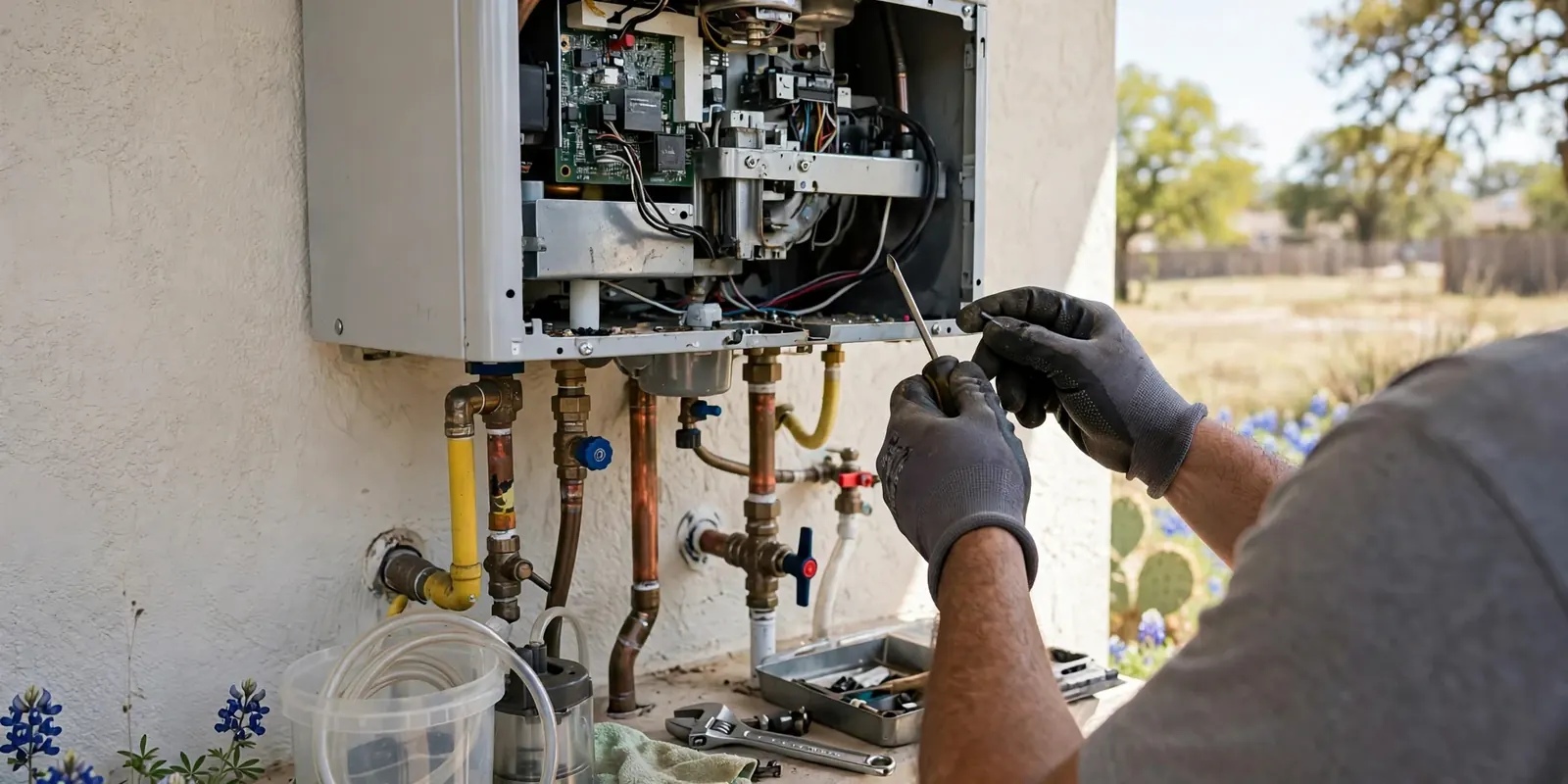
Gas smell or alarm: stop first
If you smell gas, leave the house at once. Do not flip switches or use a phone inside. From outside, call the gas utility or 911 before you call a plumber. A carbon monoxide alarm that sounds means the same thing: get everyone outside and call 911.
Which parts of the job fit a careful homeowner
This is general plumbing knowledge and not a legal opinion. The permit question is one to settle with the city.
| Task | Risk level | Honest advice |
|---|---|---|
| Draining and removing the old tank | Moderate | Possible for a handy person. Scalding water and weight are the hazards. |
| Water connections and isolation valves | Moderate | Doable with practice. Leaks show up after the first fill. |
| Pressure relief and discharge line | Moderate | Must be correct. A blocked relief line is dangerous. |
| Gas line sizing and connection | High | Leave to a licensed professional. A leak or undersized line is a fire risk. |
| Vent pipe and combustion air | High | Leave to a licensed professional. Poor venting can send carbon monoxide indoors. |
| New electrical circuit or panel work | High | Hire a licensed electrician. |
Whether a homeowner may do any of this under city rules is a question for Mauldin Building and Zoning.
Why gas and venting are the real danger
A gas tankless heater burns a lot of fuel in a small chamber and sends the exhaust out through a vent pipe. If a joint is loose, the pipe is the wrong material, or the termination is too close to a window, exhaust can enter the home. Carbon monoxide is colorless and odorless, which is why detectors matter.
A gas connection has to be tight, tested, and sized for the load. Many existing tank heaters sit on a half inch line that is too small for a tankless unit. A homeowner can tighten a fitting and still miss the real flaw, which is the pipe size or a slow leak at a thread.
Licensing and code rules in Mauldin
South Carolina licenses residential plumbers through the Residential Builders Commission, which sits under the Department of Labor, Licensing and Regulation (LLR). LLR runs a public residential license lookup. Commercial plumbing work over $10,000 falls under the SC Contractors' Licensing Board.
For code, South Carolina adopted the 2021 SC Plumbing Code, or the 2021 International Plumbing Code with SC modifications, and local enforcement has been required since January 1, 2023. The 2024 SC codes have a scheduled effective date of January 1, 2027. If your install slips into that window, the plumber should know which edition applies.
The City of Mauldin Building and Zoning office states that a permit is required before you add, alter, or replace any plumbing system, and that contractors must be licensed, bonded, and insured. Whether a homeowner may pull their own permit for a tankless install is not something this guide can confirm. Ask the Mauldin Building and Zoning office at (864) 234-3475 before you buy.
Source type: SC LLR licensing pages, SC Building Codes Council, and City of Mauldin Building and Zoning.
Mistakes that show up on DIY units
The usual errors are small and costly. A relief valve discharge pipe gets capped, a vent joint is pushed together without sealing, or the unit is hung on a wall that cannot carry about 40 to 60 pounds. Some installers also skip the sediment trap, a short capped section of gas pipe that catches debris before it reaches the burner.
Another common miss is sizing. A unit that cannot raise incoming water enough for two showers gives lukewarm water, and no amount of tinkering fixes a unit that is too small. A site visit by a licensed plumber catches that before you pay for the wrong box.
If you decide to hire it out, in what order
- 1
Verify the license
Use the LLR residential lookup, and ask for a licensed, bonded, and insured contractor as the city requires.
- 2
Get a site visit
The plumber checks gas line size, vent route, and electrical supply.
- 3
Ask who pulls the permit
Make sure it exists before work starts.
- 4
Plan for the inspection
The inspector checks gas, vent, and relief valve work.
- 5
Run the first fill together
Check every joint for drips and test the hot water at several fixtures.
What can go wrong with an unpermitted install
An install done without a required permit can cause problems when you sell the house or file an insurance claim. Insurance coverage varies by policy, so ask your carrier how it treats unpermitted work. The honest risk is not only a fine. It is a hidden gas or vent defect that nobody inspected.
Manufacturers also write warranty terms around installation. Some require a licensed installer, and some void coverage for errors. Read the paper that comes in the box before you start.
If you only want to help, do these safely
- Turn off the water and gas at the shutoffs and tag them.
- Install a carbon monoxide detector near bedrooms and the heater.
- Photograph the old heater, pipe sizes, and vent path for the quote.
- Clear the space around the mounting wall.
- Flush the new unit's isolation valves yearly after install.
Leave final gas, vent, and electrical connections to a licensed professional. For a quote on a tankless job, see tankless water heater service or call (855) 575-2890.
Planned work versus a failed tank
A tank that is leaking is a different situation. Shut off the water at the heater and the power or gas, then call. A planned swap gives you time to read the manual, but it does not change who must handle gas and venting.
For a broader scope such as moving the unit or adding new lines, see plumbing installation. Homeowners in Taylors and Greenville should ask their own city or county office, because local rules differ.
DIY tankless questions from Mauldin homeowners
This guide cannot confirm that. The city says a permit is required to add, alter, or replace any plumbing system. Ask the Mauldin Building and Zoning office at (864) 234-3475 what a homeowner may do.
Residential plumbers are licensed by the Residential Builders Commission under LLR, and the lookup is public. Commercial work over $10,000 goes through the Contractors' Licensing Board. Mauldin also requires contractors to be licensed, bonded, and insured.
Leave the house, do not touch switches, and call the gas utility or 911 from outside. Do not call a plumber first.
No. The vent material must match the unit type and manufacturer instructions. Stainless is used for hot exhaust units and PVC for condensing models. The wrong pipe can leak exhaust.
Hire a licensed electrician for new circuits and panel work. Electric units pull heavy current and mistakes cause fires.
LLR lists the 2021 SC Plumbing Code or the 2021 IPC with SC modifications, enforced locally since January 1, 2023. The 2024 codes are scheduled for January 1, 2027.
Draining the old tank and helping with the water connections are the most DIY-friendly. Leave gas, venting, and electrical to licensed professionals.