Common installs and what each one involves
Most installation questions start with scope. This table shows what the work usually includes and the detail that most often changes the plan.
| Job | What the work includes | Planning detail |
|---|---|---|
| New toilet | Remove old unit, inspect the flange, set a new seal and supply line | Rot under the floor or a low flange adds time |
| Sink and faucet | New supply stops, P-trap, drain connection, leak test | Old stops that will not close should be replaced now |
| Dishwasher or ice maker | Supply tee with shutoff, drain tie-in with a high loop or air gap | A wrong drain loop lets dirty water drift back |
| Washer box | Supply valves and a standpipe drain | Code sets the standpipe between 18 and 42 inches above the trap |
| Added bathroom | Supply stubs, drain, vent and rough-in before fixtures | Drain pipe needs a quarter inch of slope per foot |
Water heaters have their own page. Permit rules vary by job, so ask the Mauldin Building and Zoning office.
What Mauldin requires before you install
The City of Mauldin Building and Zoning office says a permit is required before you add, alter or replace any plumbing system. That wording is broad, so assume your install needs one until the office says otherwise. It sits at 5 E. Butler Rd, takes applications through the city portal and answers at (864) 234-3475.
Contractors must be licensed, bonded and insured and must hold the permit before they start. A plumber who offers to begin first and paper it later is handing you a problem at resale or inspection.
Code matters too. The 2021 South Carolina Plumbing Code, or the 2021 International Plumbing Code with SC modifications, has been enforced locally since January 1, 2023. The 2024 codes are scheduled for January 1, 2027. For a remodel planned near that date, ask which edition your permit falls under.
Source type: City of Mauldin Building and Zoning page, SC LLR Building Codes Council.
From first call to final check
- 1
Scope on the phone
Say what you are adding, where it goes and what is behind that wall. Photos of the space help the plumber plan.
- 2
Rough-in
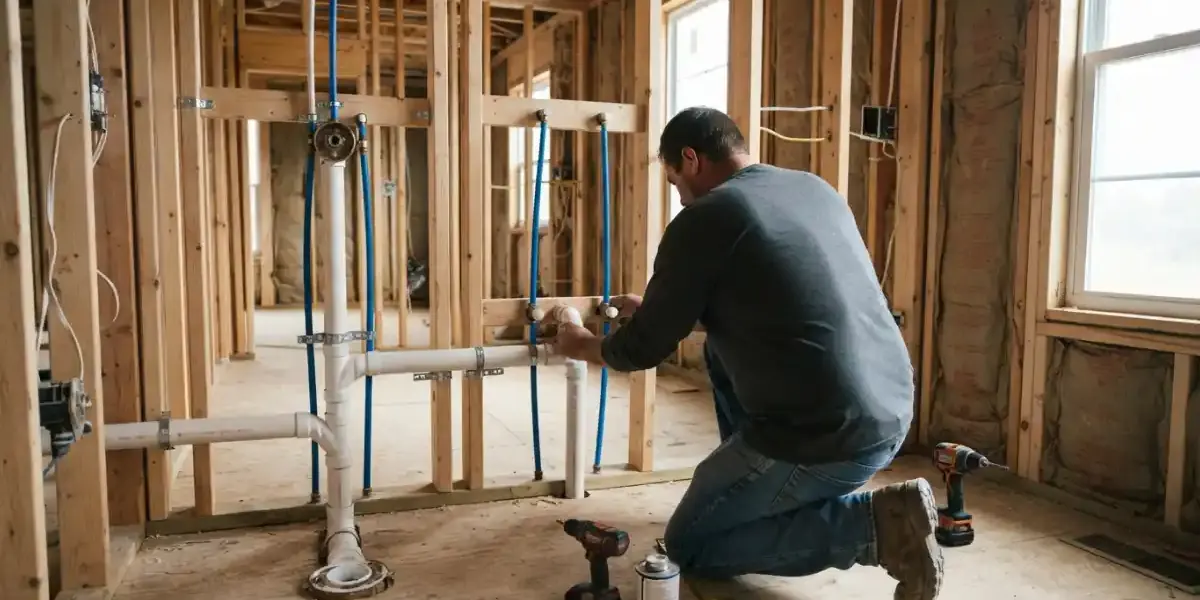
Supply lines, drains and vents go in first, sized for the fixtures you picked, before any wall is closed.
- 3
Test before closing
Supply lines are pressure tested and drains are filled and checked for leaks while everything is still visible.
- 4
Inspection
If your permit requires one, the city inspects the rough-in before drywall covers it.
- 5
Set fixtures
Toilets, sinks and faucets are set, connected and run through a final leak check.
When an install turns up a leak
Installs have a habit of uncovering old problems. Pulling a vanity reveals a weeping shutoff valve. Opening a wall for a new line shows a corroded joint on the old one. Rot under a toilet flange only appears once the toilet is lifted.
Fix it while the wall is open. The labor to reach the pipe is already paid for, and a stop valve costs little compared with reopening drywall. If the source is unclear, a round of leak detection before the walls are closed is cheap insurance.
Sometimes the honest answer is to skip the new part. A faucet on rusted galvanized supply will not fix weak pressure. In that case, price replacing the supply pipes behind the wall first, then pick fixtures.
Get the space ready before install day
- Find your main water shutoff and make sure it turns.
- Clear about three feet around the work area, including under sinks.
- Have fixtures on site and check the rough-in distance. Toilets are commonly 12 inches from the wall, but 10 and 14 inch models exist.
- Take photos of the existing setup so the plumber sees what is behind the cabinet.
- Decide on new shutoff valves, which are cheap to add while lines are open.
Doing this on a tight schedule? Ask about a same-day appointment when available, and keep the 24/7 line at (855) 575-2890 handy.
What an install costs
Typical U.S. labor for a basic toilet or faucet swap is about $150 to $450. A washer box or dishwasher hookup runs more. The plumbing portion of an added bathroom commonly runs $2,000 to $6,000, before tile, fixtures and drywall. Your number comes from a call.
Insurance generally does not cover planned upgrades. For a price on your project, call (855) 575-2890.
Plumbing installation questions from Mauldin homeowners
The city's wording is that a permit is required before you add, alter or replace any plumbing system. Whether a simple like-for-like swap is treated differently is a question for the Building and Zoning office at (864) 234-3475.
Often yes. Ask on the call, because fit matters. A fixture with the wrong rough-in size or a missing part can stall the job.
A toilet or faucet swap is commonly a couple of hours. A washer box or kitchen hookup can fill a half day. An added bathroom spans several visits with a test and inspection in between.
You get a choice. Fix it now while the wall is open, or close it and plan a repair later. The plumber should show you the problem before asking you to decide.
Residential plumbers are licensed through the SC Residential Builders Commission under LLR, which has a public online lookup. Search the name before you sign. Commercial work over $10,000 goes through the Contractors' Licensing Board.
The 2021 South Carolina Plumbing Code or the 2021 International Plumbing Code with SC modifications, enforced locally since January 1, 2023. Your plumber should work to it and your permit confirms it.
The same dispatch covers Simpsonville and nearby towns. Permit offices differ by city and county, so confirm which one covers your address. Faucet problems on an existing sink can be handled through faucet repair instead.