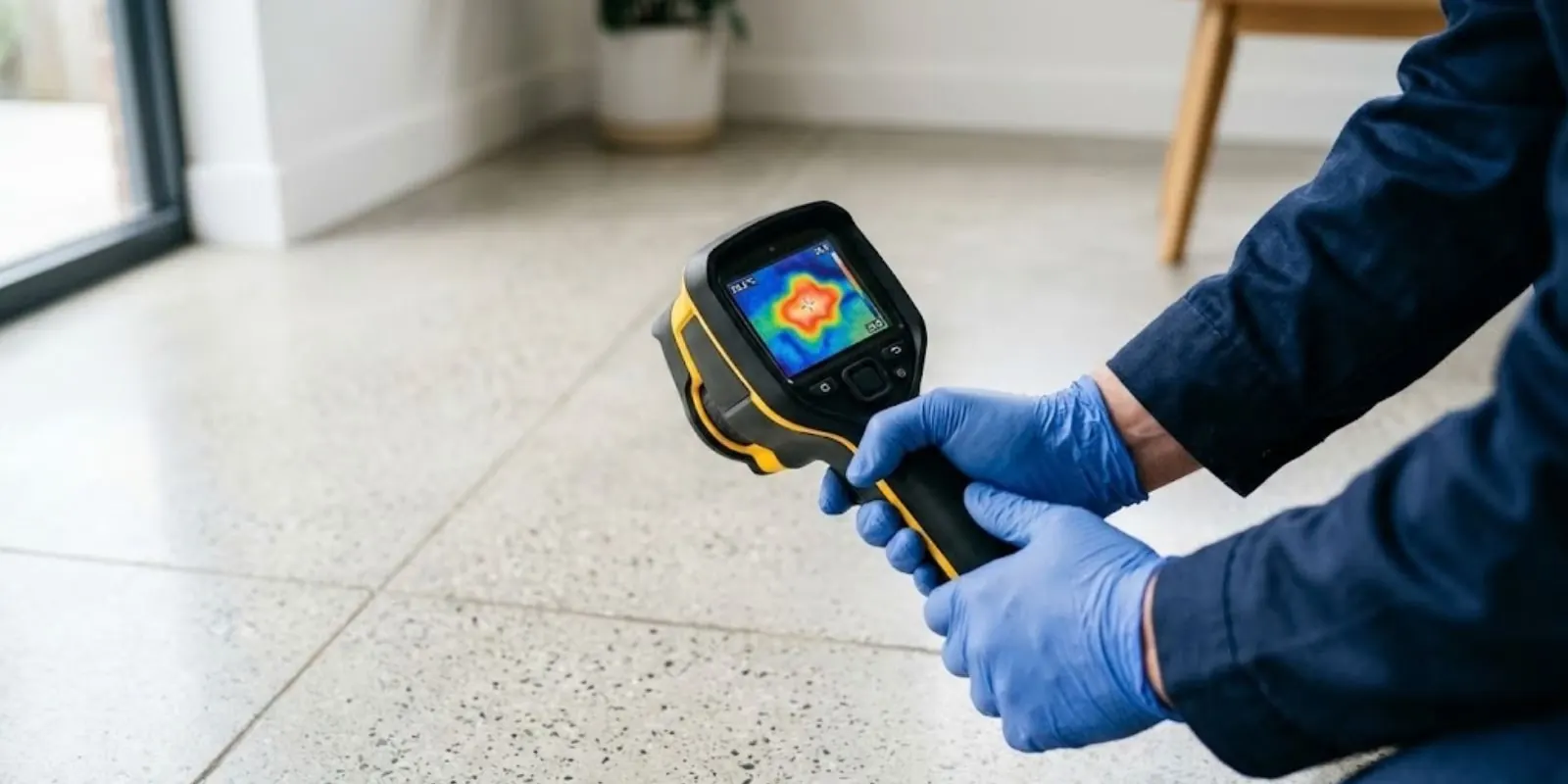
Leaking water under the floor right now and no puddle to show for it
A slab leak does not announce itself with a puddle. It shows up as a warm patch of tile, a meter that spins with every fixture off, or a faint hiss at night. If that sounds like your house, treat it as urgent and call the 24/7 line at (855) 575-2890. Same-day and after-hours visits are offered when the schedule allows.
While you wait, turn off the main shutoff where the line enters the house. Open one faucet at the lowest point to drain the lines, and switch off the water heater breaker or gas control so the tank does not run dry and overheat.
Signs the leak is under the slab
One sign alone can mean something simpler. Two or three together point down.
- A warm or hot spot on the floor, often from a leaking hot line.
- The sound of running water when every tap and appliance is off.
- Water meter dial moving after you shut off every fixture for at least 15 minutes.
- A sudden jump in the water bill with no change in use.
- Damp carpet, lifting laminate, or a musty smell near a wall base.
- New cracks in tile or drywall, or low pressure at every faucet.
A meter test can separate a slab leak from a toilet running in the dark. Leak detection pins down the spot before anyone cuts concrete.
What to do while you wait for the plumber
- Shut off the main water valve if you hear running water or the meter keeps moving
- Turn off the water heater at the breaker or gas control so it does not run dry
- Keep power tools, cords and appliances away from any wet floor
- Move rugs and furniture off warm or damp spots so the slab can be checked
- Take a photo of the meter reading and the time to show the plumber
- If you smell gas or see water near an outlet, leave the area and call 911 or the gas utility
How the leak gets located without guessing
Plumbers use a few tools together. A pressure test isolates which line is losing water, and an electronic listening device picks up the sound of the leak through the floor. A thermal camera can show a hot line, and a tracer gas or line locator confirms the path of the pipe.
The aim is a hole the size of a dinner plate, not a trench across the living room. Marking the pipe route first also protects other lines and electrical conduit in the slab.
Fixing it: spot repair, reroute or repipe
Each option has a place. The figures are typical U.S. ranges, and the real price comes from a call once the leak is located.
| Method | Choose it when | Typical range |
|---|---|---|
| Break the slab and patch the pipe | One leak, pipe otherwise healthy, floor easy to reach | $500 to $4,000 |
| Reroute through the attic or walls | Leak in a hard-to-reach spot, or pipe is old | $1,500 to $5,000 |
| Epoxy or liner coating inside the pipe | Small pinholes in otherwise intact copper | $1,500 to $4,000 |
| Whole-house repipe | Repeated leaks in the same material | $4,000 to $15,000 |
Repair is cheaper today. If a third pinhole leak shows up in the same copper, the pipe is wearing out and a patch only moves the failure.
Mauldin's red clay and 47 inches of rain
The USDA Cecil series description, which covers red clay soils common across the South Carolina Piedmont, lists a clay layer roughly 8 to 26 inches deep. NWS Greenville-Spartanburg lists annual precipitation at about 47 inches. That does not mean every Mauldin lot has the same soil, so a plumber should check yours.
Why it matters to a leak: clay drains slowly, and wet soil under a slab holds water instead of letting it pass. Leaked water can travel along the bottom of the concrete and surface a room away. That is why the leak is located by instrument first, and the dig goes where the tool says.
Source type: USDA Cecil series description and NWS Greenville-Spartanburg precipitation normals.
When not to jackhammer
If the leak is on a cold line in the middle of a floor you can reroute around, going overhead often costs less than breaking and re-pouring concrete. If the line is on a hot line to a water heater, the cause may be a failing water heater connection and not a slab leak at all. Ask the plumber to show the test result before any cutting begins.
What drives a slab leak bill
Slab leaks cost more than a faucet fix because of access and finishes.
Insurance may cover resulting water damage on a sudden leak, but coverage varies by policy, so ask your carrier. For a number based on your floor plan, call (855) 575-2890.
Slab leak questions from Mauldin homeowners
Yes. The line at (855) 575-2890 is answered 24/7. Shut the main valve, keep the floor dry and the dispatcher will book a visit the same day when the schedule allows. Hot water leaking under the floor is a good reason to call after hours. The same dispatch covers Simpsonville and nearby towns.
Shut every fixture off and watch the meter for at least 15 minutes. If the dial still moves, add a dye tablet to each toilet tank. Colored water in the bowl after an hour means the toilet. A moving meter with clear toilets points to a hidden pipe.
Greenville Water maintains the line up to the outlet side of the meter. The line leaving the meter is the customer's to maintain. A leak between the meter and the house is a water service line repair.
Usually not. Once a leak is located by instrument, the opening is small. Matching tile or flooring afterward is the bigger variable.
Coverage varies by policy. Many pay for water damage caused by a sudden leak but not for the pipe itself. Ask your carrier before work begins and keep photos.
Even a pinhole leak runs around the clock. Over days it can soften soil, lift flooring and raise a bill noticeably. Shutting the main stops it until the repair.